

Authorised Partner






Additive Manufacturing for Aerospace and Defense
Reduce Weight, Improve Functionality, and Consolidate Parts
With our decades of experience in additive manufacturing for the aerospace industry, we use our consultative approach to help you create airworthy parts with reduced weight and improved performance. We are uniquely qualified to help you rapidly design and produce consolidated components for aerospace and defense applications, accelerate the certification process, and optimize your entire supply chain.
Additive Manufacturing Applications for Aerospace and Defense
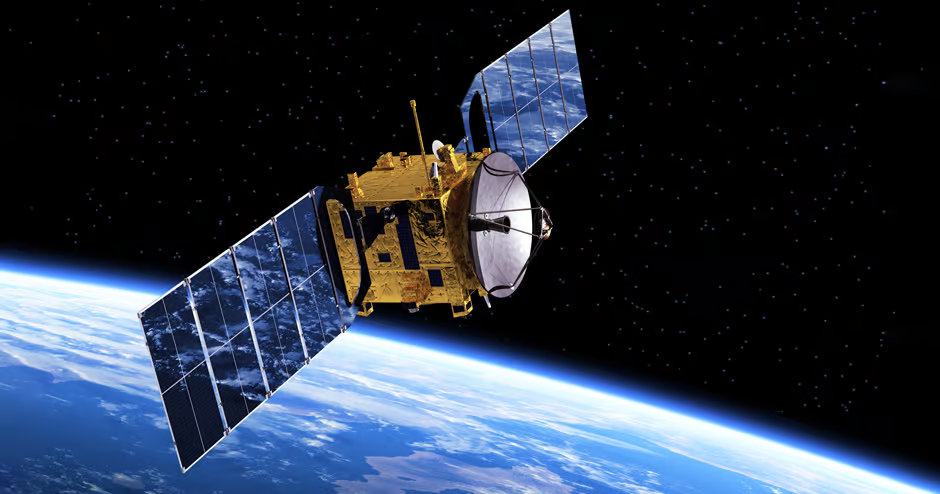
Space-Worthy Additive for Passive RF at Warp Speed
Our global Application Innovation Group (AIG) reduces risk and creates a faster ROI for our customers by developing qualified, transferrable, and scalable production processes to companies of all sizes – with a business model designed to let you keep your IP and grow capability in your preferred supply chain.
Pushing the Boundaries of Passive RF Hardware Design

Monolithic Design for Reduced Part Count
Simplify complex RF hardware to reduce part count and eliminate costly assembly, test, and integration steps. Direct metal printing (DMP) helps our customers impact system level performance by reducing assemblies into single monolithic structures.

Smaller Part Footprints
Increasing the capacity for multiple beams within a single satellite is a major industry trend. While reduced weight drives major improvements, volume is also mission critical. Better packaging efficiencies allow more channels for more services within the limited satellite design volume.

Smooth Surface Topology
Machined surfaces have sharp peaks and troughs, while 3D printed surfaces are made of spheroids melted together for a smooth surface topology. Testing has demonstrated that additively manufactured RF components can perform as well or better than machined surfaces even with higher Ra values. Additive manufacturing enables the ability to shape a part for more effective signal filtering with an optimized surface topology.
Benefits of 3D Printing for Passive RF
Dedicated Industry Expertise
3D Systems has in-house aerospace industry experts across all major aspects of aerospace parts manufacturing, from engineering and design to certification and production. Our experts work with you to optimize your efforts in manufacturing aerospace components for commercial, business, military, aviation, and space applications.
Guided Implementation and Support
Based on more than a decade of leading-edge manufacturing within highly regulated environments such as healthcare, aerospace, and high tech, we provide you with unique insights, assist in the certification process, and enable a streamlined pathway to full-scale manufacturing using our innovative technology.
A Strong ROI
Our two AS/EN9100 production facilities allow for parallel paths to application development and on-site customer process development. This streamlines the implementation of additive manufacturing and results in an ROI of up to 60%.
Achieve Improved Functionality, Decreased Weight, and Lower Costs
By tapping into our advanced metal additive technology and aerospace expertise, you can make shapes and structures that are impossible with traditional manufacturing. For your product, this means achieving improved functionality, decreased weight, and lower costs, all while maintaining or improving material strength.
Your component designs can fit your exact functional requirements for the part, and you can optimize structures - with strong, hollow lattice structures, for example - to reduce weight by 10% to 50%.

Solving Structural Challenges: Optimizing Satellite Antenna Brackets

Reduce Component Weight
Use direct metal printing to manufacture strong, lightweight satellite components that maintain or enhance functional performance. Since components made with direct metal printing are light, satellites can carry more without increasing costs.

Match Material Specifications
Due to the unique vacuum chamber concept of our metal printers, argon gas consumption is heavily reduced while at the same time showing best in class oxygen purity (<25 ppm). This results in exceptionally strong parts of high chemical purity.

Decrease Lead Time
Manufacture components with uncompromised strength that meet the unique specifications of any satellite.

Improving Performance for Space Launch, Create More-Efficient Rocket and Satellite Engines
Propulsion components are fundamental to space launch vehicle performance by utilizing optimally designed hardware, which offers the best overall system efficiency. Injectors, thrust chambers, nozzles, and turbopumps are components and systems with complex internal structures that promote combustion and heat transfer to burn fuel and oxidizer efficiently, which requires the highest quality components made of high strength, heat-resistant superalloys.
All of this is now possible thanks to direct metal 3D printing solutions and material expertise from 3D Systems. 3D print nozzles, fuel pre-burners, valves, manifolds, and other propulsion systems that maximize space and material usage. Space launch and propulsion experts can design monolithic multi-material combustion devices that perform more efficiently than ever before. Fewer components reduce manufacturing costs, eliminates complex assemblies, and increases overall performance and reliability. In addition, these optimized products can be developed in far less time to deliver more effective components to market faster.
Solve the Challenges Associated with Propulsion Design

Reduce Parts Count
Consolidate traditionally complex assemblies into monolithic propulsion system designs. -- Fewer quality controls required -- Simplified supply chain -- Shorter integration time

Simplify Fluid Management
Our metal additive manufacturing solutions allow for the production of propulsion system components with freeform fluid channel designs. This reduces turbulence, pressure fluctuations, weight, and space requirements.

Improve System Efficiency
Additive manufacturing enables propulsion and vehicle design engineers with unprecedented design flexibility. The technology allows for development of novel orifice shapes, heat exchangers, and mixing chambers, thus optimizing staged combustion cycles for maximum performance and efficiency.

Reduce Manufacturing Costs and Lead Time
In traditional manufacturing, heat-resistant superalloys used in propulsion devices, such as thrust chambers or turbomachinery combustors, present challenges in machining, including short tool life and high material waste. Additive manufacturing has no difficulty with these materials, regardless of geometry or superalloy used. Further, replacing multipart assemblies (such as injectors, swirlers, and heat exchangers) with monolithic parts improves manufacturing yield and reduces labor costs.
3D Systems Delivers Increased Performance and Productivity to Manufacturers
Application Development
Through our Application Innovation Group, we leverage years of space launch and metal additive manufacturing expertise to help find optimized solutions for your applications. The support we provide enables an engineering and design approach that repeatedly meets strict requirements.
Metal Additive Expertise
With our combination of metal hardware, software, and materials, we offer solutions with unprecedented design flexibility, economics, and reliability that traditional manufacturing cannot match.
Production Capability
With our production facilities, we can be your agile manufacturing arm, helping you transition from prototype to production while offering increased supply chain capacity and flexibility. We also offer on-demand printing services available to you 24/7.
Streamline the Design and Production of Heat Exchange Components
With our years of experience in metal additive manufacturing for aerospace applications, we enable you to create complex, reliable heat transfer structures - within limited volumes - that traditional manufacturing can’t match.
You can also use our metal additive manufacturing to lower your lead times and enhance the performance of critical thermal management parts that require multiple thin walls, large surface-to-volume ratios, and extremely exacting tolerances.

Overcome the Challenges of Manufacturing Heat Exchangers

Maximize Heat Transferred Within a Limited Footprint
Use direct metal printing to design and manufacture small, accurate, complex heat transfer structures with less assembly, shorter lead times, reduced costs, higher yield, and better component reliability.

Produce Thin, Leak-Tight Walls
Create leak-tight walls thin enough to increase efficiency between two heat-exchanging channels. Our additive manufacturing process provides the metal strength and density to ensure part reliability and performance across an increased component lifetime.

Increase Surface-to-Volume Ratios
Design complex features for heat transfer structures with vector-level control. Our additive manufacturing solutions enable you to increase heat-exchanging surface areas while keeping your components small and lightweight. Our solutions also help you avoid the cost increases and reduced reliability of traditional manufacturing methods in these kinds of applications.

Benefit from Time- and Cost-Saving Advantages
Our advanced software, hardware, and materials for 3D-printed investment casting patterns enable aerospace parts manufacturers to create complex casting patterns in a fraction of the time it takes to create molds using traditional tooling.
By using our additive manufacturing process, you can create hollow patterns that allow for greater design complexity, reduced component weight, and lower assembly costs.
Improve Investment Casting for Aerospace Parts Manufacturing

Create Stronger, More Reliable Patterns
Our 3D-printed hollow casting patterns are strong enough to support parts during manufacturing. While durable, these patterns can still collapse under their own expansion, and their unique material and design allow for complete drainage.

Build Complex Design Features More Easily
With greater design freedom and economy, you can produce incredibly complex casting patterns. Aerospace parts designers can also consolidate shapes to reduce component weight and assembly costs.

Reduce Lead Time
Avoid the time and expense of using machine injection molding tools for casting patterns. Our tool-less casting pattern production allows you to create patterns for aerospace component manufacturing faster. In many cases, you can go from CAD model to low volumes of final casted parts within 48 hours.
Boost Electric Vehicle Performance Range with Lightweight, Highly Efficient Components
The pivot towards green energy has resulted in greater adoption of eVTOLs, “flying cars,” electric helicopters, electric aircraft, and drones. Advances in the aerospace and defense industry are driving this adoption as well. All the new electric flying vehicles require highly efficient and lightweight electric motors to achieve reproducible high-performance take-off weight and flying range capabilities.
With additive manufacturing, you gain innovative design flexibility to create the lightweight, highly efficient electric motor parts (e.g., stators, rotors, heat exchangers, etc.) that enable these capabilities.

Solve Your Manufacturing Aids Challenges

Achieve Integral Design
Consolidate traditionally complex assemblies into a single 3D-printed design. Direct metal printing (DMP) gives you the significant design flexibility to combine different functional parts, allowing you to integrate thermal management geometries directly into your electric stator design and greatly reduce the complexities of conventional cooling features (e.g., heat exchangers).

Lower Weight with Enhanced Functionality
Use DMP to manufacture strong, lightweight electric motor components that maintain or enhance functional performance. Advanced DfAM can open new horizons for induction & heat transfer optimization. Since components made with DMP are lightweight, electric flying vehicles can carry more passengers or cargo without increasing costs.
3D Systems Helps Aerospace and Defense Manufacturers Maximize Efficiencies
Dedicated Industry Expertise
3D Systems has in-house aerospace industry experts across all major aspects of aerospace parts manufacturing, from engineering and design to certification and production. Our experts work with you to optimize your efforts in manufacturing aerospace components for commercial, business, military, aviation, and space applications.
Guided Implementation and Support
Based on more than a decade of leading-edge manufacturing within highly regulated environments such as healthcare, aerospace, and high tech, we provide you with unique insights, assist in the certification process, and enable a streamlined pathway to full-scale manufacturing using our innovative technology.
A Strong ROI
Our two AS/EN9100 production facilities allow for parallel paths to application development and on-site customer process development. This streamlines the implementation of additive manufacturing and results in an ROI of up to 60%.
Additive Manufacturing You Can Trust
We help maximize your manufacturing process to reduce costs while achieving greater consistency and reliability in your final aerospace components. We work with you to scale your additive manufacturing capabilities at your own pace, and help you ensure traceability and transparency for regulatory and quality control requirements.
A Focus on Research and Design
As demands in the aerospace and defense industries evolve, our additive manufacturing ensures that you can continuously innovate your production and products. Using our in-house expertise, we remain at the forefront of change, developing advanced technology and materials for aerospace applications.