

Authorised Partner






Additive Manufacturing for Semiconductor Capital Equipment
Experience performance, productivity, and reliability improvement in semiconductor capital equipment
Semiconductor lithography and wafer processing equipment require constant innovation to meet the accuracy, speed, reliability, and productivity demands of increasingly complex microchip production. Additionally, the continual need for increased quality, improved total cost of ownership, reduced time to market, and minimized supply chain disruption persists.
With decades of expertise in semiconductor applications and metal additive manufacturing, 3D Systems has a dedicated team that understands these challenges and can help semiconductor OEMs and suppliers overcome them. As a complete solution provider, we will collaborate with you on application development, helping you transition from prototype to production and enabling your own metal additive capabilities.
Improve Semiconductor Manufacturing Equipment Accuracy and Simultaneously Increase Speed and Throughput
20+
years of additive manufacturing and semiconductor expertise
1 - 2 nm
improvement in semiconductor equipment accuracy
5X
stabilization improvement demonstrated
Applications for Semiconductor Capital Equipment

Optimize the Thermal Management of Semiconductor Equipment
Keeping temperatures within milliKelvin (mK) ranges is critical as any system disturbance has an impact at the nanometer scale. By optimizing cooling channels and surface patterns, you dramatically improve surface temperatures and thermal gradients while reducing time constants. This results in improved system speed and accuracy.
Drawing on our many years of experience in semiconductor production and applications, we can help you apply additive manufacturing to optimize the thermal management of semiconductor equipment. With unique designs attainable only with additive manufacturing, you can efficiently dissipate heat, enhance system throughput and accuracy, and improve overall performance.
The Benefits of Metal Additive Manufacturing

Additive manufacturing makes it possible to optimally design (e.g., using topology optimization), rapidly iterate, and manufacture wafer tables with complex features, such as cooling channels, that dissipate heat better.

High Quality and Accuracy for Clean Room Environments
Our metal additive solutions ensure high material quality and part accuracy, producing parts in an inert atmosphere with a steady, ultra-low oxygen level—coupled with proprietary processes for optimal particle cleanliness. This results in metal parts that meet clean room requirements and are fit for use in lithography equipment.

Performance and Productivity
Better thermal management of critical semiconductor equipment components, such as wafer tables, can improve semiconductor equipment accuracy by 1–2 nm and simultaneously improve speed and throughput. An increased machine speed and uptime leads to more wafers processed and higher overall lifecycle value. Additive manufacturing also delivers structurally optimized wafer tables with reduced part counts and assemblies. Replacing multipart assemblies with monolithic parts increases reliability, improves manufacturing yield, and reduces labor costs.
Answer Challenges Related to Thermal Efficiency

Reduce Thermal Gradients
Changing temperatures and thermal gradients in wafer tables negatively affects the lithography process and system performance, causing distortion and impacting throughput and accuracy.

Improve Time to Market
Optimizing wafer tables for thermal efficiency and performance with traditional manufacturing methods typically requires multiple design iterations that can negatively affect project timelines.

Lower Cost and Increase Reliability
Increasing wafer table complexity with traditional manufacturing, such as by introducing weld seams, typically results in rising part costs. This also sacrifices part performance and reliability.
Optimize Flow and Reduce Pressure Drop, Mechanical Disturbances, and Vibration
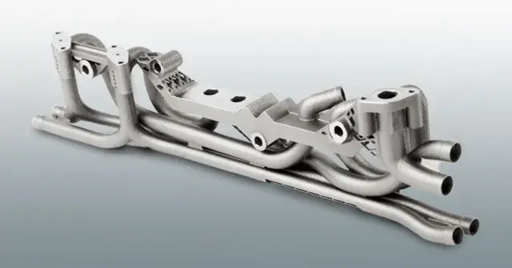
With our many years of experience in semiconductor fluid and gas flow applications, we’ve helped customers optimize manifold designs for improved performance. The traditional manufacturing of complex fluid manifolds results in large, heavy parts that have abrupt fluid flow and stagnant zones and are prone to leakage. Semiconductor capital equipment, with performance specifications in the nanometer range, are influenced by the resulting pressure drops, mechanical disturbances, and vibration.
Additive manufacturing allows for the creation of optimal fluid manifolds that reduce pressure drop, mechanical disturbances and vibration. With our metal additive solutions, you can also avoid traditional complex manufacturing assembly by consolidating several parts into one, which improves yield and reliability and reduces labor and inspection costs.

The Benefits of Metal Additive Manufacturing

Design Flexibility ‘Function over Form’
Additive manufacturing makes it possible to optimally design, rapidly iterate, and manufacture manifolds with complex freeform channels that decrease turbulence and pressure fluctuations while consolidating parts to reduce weight and space requirements.
High Quality and Accuracy for Clean Room Environments
High material quality and part accuracy produced in an inert atmosphere with a steady, ultra-low oxygen level—coupled with proprietary processes for optimal particle cleanliness—result in metal parts that meet clean room requirements and are fit for use in semiconductor equipment.

Performance and Productivity
A 90% reduction in flow-induced disturbance forces reduces system vibration and realizes a 1–2 nm accuracy improvement. An increased machine speed and uptime leads to more wafers processed and higher overall lifecycle value. Additive manufacturing also delivers structurally optimized manifolds with reduced part counts and assemblies. Replacing multipart assemblies with monolithic parts increases reliability, improves manufacturing yield, and reduces labor costs.
Answer Challenges Related to Thermal Efficiency
Reduce Fluid Flow Disturbances
Semiconductor equipment depends on manifolds that must have optimally designed and manufactured fluid channels. Traditional manufacturing methods have abrupt corners and stagnant flow zones that result in turbulence and increased pressure drops.
Minimize Weight and Volume
Traditional manufacturing, based on the geometric limitations of milling and tooling, can lead to the design of manifolds with excess weight and volume, negatively affecting system performance.
Eliminate Fluid Leakage at Connections
The geometric limitations of subtractive manufacturing means that manifolds typically undergo an assembly process that requires connection points prone to failure and leakage.

Create Structurally Optimized and Lightweight Advanced Flexure Designs
Additive manufacturing allows for the structural optimization and light-weighting of advanced flexure designs that reduce weight and minimize vibration to meet the exacting requirements of semiconductor capital equipment. Additionally, multipart assemblies can be replaced with monolithic parts for increased reliability, improved manufacturing, and yield.
With years of application engineering experience in the semiconductor industry, we can help you optimize the structural designs of flexures, advanced motion mechanisms, and components. Additive manufacturing gives designers the flexibility to optimize the structural topology of your part (i.e., lightweighting) with a suite of high-strength metal alloys. These designs can meet the performance requirements of semiconductor capital equipment more precisely, improve the strength-to-weight ratio, and deliver a faster time to market. With our metal additive solutions, you can also avoid traditional complex manufacturing assembly by consolidating several parts into one, which improves yield and reliability and reduces labor and inspection costs.
The Benefits of Metal Additive Manufacturing
Design Flexibility ‘Function over Form’
Additive manufacturing makes it possible to optimally design, rapidly iterate, and manufacture lightweight, topology-optimized flexures much closer to the ideal kinematics required with fewer unwanted degrees of freedom.
High Quality and Accuracy for Clean Room Environments
Our metal additive manufacturing solutions ensure high material quality and part accuracy, producing parts in an inert atmosphere with a steady, ultra-low oxygen level—coupled with proprietary processes for optimal particle cleanliness. This results in metal parts that meet cleanroom requirements and are fit for use in lithography equipment.

Performance and Productivity
Light-weighting semiconductor components and advanced motion mechanisms reduces inertia and improves lithography and wafer processing machine speed and uptime, leading to more wafers processed. Additive manufacturing also delivers structurally optimized flexures with reduced part counts and assemblies. Replacing multipart assemblies with monolithic parts increases reliability, improves manufacturing yield, and reduces labor costs.
Answer Challenges Related to Flexure and Structural Optimization

Reduce Vibration, Hysteresis and Inertia to Improve Cycle Time
Semiconductor capital equipment features fast-moving mechanisms and components, and unnecessary weight can induce vibration, resonance, and inertia into the system, which negatively affects system accuracy and speed.
Optimized Strength-to-Weight Ratios
Reducing flexure weight and vibration requires designs with optimal strength-to-weight ratios to deliver exceptional system performance.

Advanced Flexure Kinematics
Conventional flexures can be bulky and still deviate from the ideal kinematics, resulting in accuracy deviations and crosstalk.
Increase Cooling Efficiency of Linear Stages While Reducing Part Count
By optimizing cooling channels and cooling jackets’ walls thickness, you dramatically improve temperature stability of the fast-moving linear stage. Maintaining encoders’ scale thermal uniformity ensures positioning accuracy and longer-term stability. Combined with component consolidation, this results in improved system reliability and a reduction in heat sources.
Drawing on our many years of experience in semiconductor capital equipment applications, we can help you apply additive manufacturing to optimize thermal management. With unique designs attainable only through additive manufacturing, you can efficiently dissipate heat, enhance system throughput and accuracy, and improve overall performance.

The Benefits of Metal Additive Manufacturing

Design Flexibility
Because additive manufacturing gives semiconductor equipment and thermal management engineers unprecedented design flexibility, they are able to unlock new levels of complexity for integrated cooling channels and reduce part counts and assemblies, thus maximizing the efficiency of linear stages cooling jackets and increasing their reliability for higher performance and accuracy.

High Quality and Accuracy for Clean Room Environments
High material quality and part accuracy produced in an inert atmosphere with a steady, ultra-low oxygen level—coupled with proprietary processes for optimal particle cleanliness—result in metal parts that meet clean room requirements and are fit for use in semiconductor equipment. Our metal additive manufacturing solutions enable wall thicknesses as low as 0.6 mm, minimizing the thermal resistance between the cooling channels and the controlled surface.
Performance and Productivity
Better thermal management and increased component reliability enable speed and uptime increases in semiconductor manufacturing equipment, ultimately leading to increased manufacturing yield with more wafers processed and higher overall lifecycle value.
Your Path to More Efficient Linear Stages Coolers
Improve Cooling Efficiency
Due to high acceleration, linear stages can generate and maintain significant thermal loads. Efficient thermal management of linear stages allows for longer service life and consistent positioning accuracy, positively impacting overall equipment throughput.

Increased Components Reliability
By creating monolithic cooling jackets, you are eliminating sources of leakage at weld lines. Superior cooling efficiency can be gained in less space, with no assembly required, translating to longer intervals between service and maximum tool uptime.
Accelerate Time-to-Market and Lower Costs
Monolithic components dramatically reduce the number of suppliers required to accomplish an engineering project. Additive manufacturing enables rapid design iteration in the product development stage with almost static cost and lead-time, independent of the geometry.

Increase Showerhead Deposition Precision and Uniformity While Reducing Production Lead Times
Showerheads are commonly used for even material deposition in semiconductor manufacturing. Their hole configuration and temperature stability are important factors in determining uniformity of deposition.
Using our metal additive manufacturing solutions, you can deliver geometries that couldn’t be produced with traditional methods, including non-cylindrical nozzle geometries for deposition control, more intricate cooling channels to extract heat, and consolidated components to prevent leakages. Thousands of small holes can be 3D printed with negligible impact on cost and production time.
The Benefits of Metal Additive Manufacturing

Design Flexibility ‘Function over Form’
Additive manufacturing makes it possible to optimally design, rapidly iterate, and manufacture lightweight, topology-optimized flexures much closer to the ideal kinematics required with fewer unwanted degrees of freedom.
High Quality and Accuracy for Clean Room Environments
Our metal additive manufacturing solutions ensure high material quality and part accuracy, producing parts in an inert atmosphere with a steady, ultra-low oxygen level—coupled with proprietary processes for optimal particle cleanliness. This results in metal parts that meet cleanroom requirements and are fit for use in lithography equipment.
Performance and Productivity
Light-weighting semiconductor components and advanced motion mechanisms reduces inertia and improves lithography and wafer processing machine speed and uptime, leading to more wafers processed. Additive manufacturing also delivers structurally optimized flexures with reduced part counts and assemblies. Replacing multipart assemblies with monolithic parts increases reliability, improves manufacturing yield, and reduces labor costs.
Even Deposition with Semiconductor Showerheads
Improve Cooling Efficiency
Due to high acceleration, linear stages can generate and maintain significant thermal loads. Efficient thermal management of linear stages allows for longer service life and consistent positioning accuracy, positively impacting overall equipment throughput.
Increased Components Reliability
By creating monolithic cooling jackets, you are eliminating sources of leakage at weld lines. Superior cooling efficiency can be gained in less space, with no assembly required, translating to longer intervals between service and maximum tool uptime.
Accelerate Time-to-Market and Lower Costs
Monolithic components dramatically reduce the number of suppliers required to accomplish an engineering project. Additive manufacturing enables rapid design iteration in the product development stage with almost static cost and lead-time, independent of the geometry.
Increase Cooling Efficiency of Linear Stages While Reducing Part Count
By optimizing cooling channels and cooling jackets’ walls thickness, you dramatically improve temperature stability of the fast-moving linear stage. Maintaining encoders’ scale thermal uniformity ensures positioning accuracy and longer-term stability. Combined with component consolidation, this results in improved system reliability and a reduction in heat sources.
Drawing on our many years of experience in semiconductor capital equipment applications, we can help you apply additive manufacturing to optimize thermal management. With unique designs attainable only through additive manufacturing, you can efficiently dissipate heat, enhance system throughput and accuracy, and improve overall performance.

The Benefits of Metal Additive Manufacturing

Design Flexibility
Additive manufacturing makes it possible to optimally design, and rapidly iterate and manufacture gas feeders and mixers within tight spaces, with numerically modeled gas pathways that reliably convey and efficiently mix gases toward the process chamber.

High Quality and Accuracy for Clean Room Environments
High material quality, fine part details and accuracy produced in an inert atmosphere with a steady, ultra-low oxygen level—coupled with proprietary processes for optimal particle cleanliness—result in metal parts that meet clean room requirements and are fit for use in semiconductor equipment.
Performance and Productivity
A reduction in gas flow turbulence enables an accurate and even spread of cleaning and etching gases, increasing overall system efficiency and throughput to process more wafers. Additive manufacturing also delivers structurally optimized gas feeders with reduced part counts and assemblies. Replacing multipart assemblies with monolithic parts increases reliability, improves manufacturing yield, and reduces labor costs.
Optimizing Gas Conveyance and Mixing

Improve Gas Flow Efficiency
Additive manufacturing gives semiconductor equipment engineers unprecedented design flexibility. They are able to unlock novel internal patterns, nozzle shapes, and mixing chambers, thus optimizing gas flow and mixing for maximum performance and efficiency.
Increase Reliability
Additive manufacturing delivers structurally optimized gas feeders and mixers with reduced part counts and assemblies. This greatly increases component reliability by eliminating fluid leakage at connections under the highest temperatures and operating pressures for higher component integrity.

Minimize Volume
Thinner walls and component consolidation deliver leak-tight integrity and enable more efficient functionality in a smaller package size. Produce multi-axis features and trapped volumes with significant ease compared to traditional manufacturing processes.
The Experience and Technology to Increase Performance and Gain Agility
Design Flexibility
Optimally design, rapidly iterate, and manufacture components with complex features, including wafer tables with conformal cooling channels, part-consolidated end effectors, and advanced kinematic couplings and flexures for optical components.
Produce more wafers by improving semiconductor equipment accuracy, speed, reliability, and throughput. Realize performance benefits in critical parts and subsystems, including thermal management, optimal fluid flow, lightweighting, and part consolidation.
High Quality and Accuracy for Clean Room Environments
Our metal additive solutions ensure high material quality and part accuracy, producing parts in an inert atmosphere with a steady, ultra-low oxygen level — coupled with proprietary processes for optimal particle cleanliness. This results in metal parts that meet clean room requirements and are fit for use in high vacuum environments.
Metal 3D Printing Expertise and Capability
Establish your own metal additive manufacturing capabilities and quickly scale to production volumes while partnering with us to develop new concepts/prototypes.
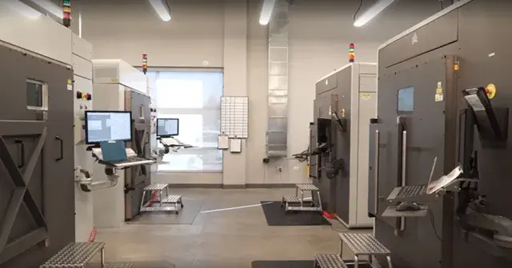
Our manufacturing facilities offer increased capacity, flexibility, and reduced inventory. We can help eliminate supply chain risks for OEMs through technology transfer by replicating our manufacturing processes and qualifying your suppliers.
Solutions for Semiconductor Manufacturing Equipment that Solve Challenges

Application Development
Through our Application Innovation Group, we leverage years of semiconductor and metal additive manufacturing expertise to help find optimized solutions for your applications. The support we provide enables an engineering and designing approach that repeatedly meets strict requirements.

Metal Additive Capabilities
With our combination of metal hardware, software, and materials, we offer solutions with unprecedented design flexibility, economics, and reliability that traditional manufacturing cannot match.
Production Capability
With our production facilities, we can be your agile manufacturing arm, helping you transition from prototype to production, while offering increased supply chain capacity and flexibility. We also offer on-demand printing services available to you 24/7.

Technology Transfer
We help semiconductor OEMs and suppliers establish their own metal additive capabilities that reduce costs and ramp times. Through hands-on training and consultation—and the transfer of prequalified manufacturing processes to your site—our dedicated team works with you across every step, from pre-production to full-scale volume production.