

top of page
CG1.png

3D Printing for Consumer Technology

Accelerate Innovation to Bring the Consumer Technology Products of the Future to Market Now

Consumer technology has become prolific in our everyday lives, spurring a revolution from devices for smart homes to connected wearables. To differentiate your company in this extremely competitive industry, you need to bring groundbreaking products to market faster and constantly create unique customer experiences that deliver value. This level of consumer demand drives the need for design flexibility, prototype performance, rapid iteration, supply chain continuity, sustainable solutions, and operational productivity from prototyping to bridge production and mass customization. 

3D Systems’ consultative approach and 3D printing solutions can give you a competitive advantage to meet these challenges. With a dedicated team of experts and decades of industry experience, we collaborate with you on application development and leverage the largest suite of additive manufacturing solutions in the industry to meet your specific needs. 

3D printing solutions can address prototyping and low-volume production needs for a vast array of new and emerging consumer technologies. This can range from virtual and augmented reality, to enter the immersive online environment of the metaverse, to smart homes, IoT, AI, 5G, connected wearables, computers, and other consumer electronics. 

Additive manufacturing solutions that advance consumer technology performance and accelerate time-to-market from design to pre-production.

10x

faster product development

500K+

production parts on our printers every day

130+

high-performance materials

3D Printing Applications for Consumer Technology
CG2.png
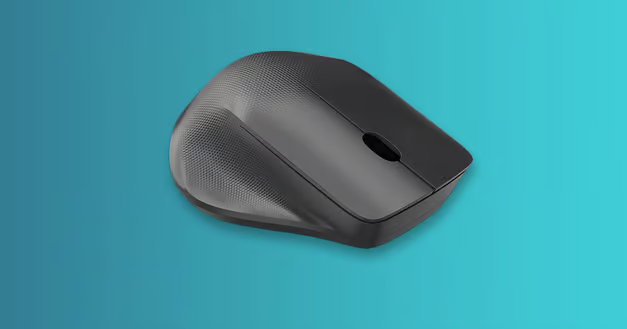
Blur the Line Between Prototyping and Pre-Series Production

Technological innovations create new opportunities to deliver unique consumer experiences, yet they can also present daunting engineering challenges for quality, accuracy, and lead-time.

Our 3D printing solutions eliminate tooling costs and lead-times for housings and covers, and deliver end-use parts with the desired quality, accuracy, and mechanical properties. Our consultants can help you in the entire process, from application development and optimizing part performance, to streamlining your prototyping to production workflows, making them faster and more efficient. 

Solving Housings and Covers Challenges with 3D Printing

CG3.png

Rapid Order Fulfillment

With 3D Systems’ solutions capable of 3D printing prototypes in less than 24 hours, OEMs can optimize their workflow to reduce the time between design iterations, enabling rapid order fulfillment and faster time-to-market. By eliminating the need for tooling, our additive manufacturing solutions reduce the duration of this process from weeks to hours, helping to save costs and improve quality. Further, in-house production guarantees part delivery for a streamlined supply chain.

CG4.png

End-Use Performance

Accuracy, precision, and mechanical properties are critical factors for end-use components and product validation. Truly functional 3D printed prototypes enable faster real-world product development and validation to take place before costly investments in production tooling. These realistic prototypes can replicate the final production product, in appearance and function, including mechanical characteristics, quality, performance, and optimized ergonomics. 

CG5.png

Aesthetic Finishing

Materials come in a range of colors from opaque blacks and whites to clear, and print with exceptional surface quality, similar to injection molding. 3D textures can also be digitally added to minimize downstream finishing requirements and accurately represent end-use parts. Materials are compatible with plating or painting for premium aesthetics.

2fe153_04d0afd6fa2f424e8ce10b7c68e9fafb~mv2.png

Operational Productivity

Our end-to-end additive manufacturing solutions are designed to deliver industry-leading quality, reliability, and productivity to keep your operation running efficiently for high-volume production of prototypes, bridge manufacturing, and mass customization. Maximized uptime, reduced labor enabled by downstream compatibility with automation, and minimized waste contribute to a lower cost per part and high manufacturing yield.

SC7.png

Mass Customization

Designing and building customized components like housings and covers is part of creating next-generation consumer technology products. Tailoring these to the consumer can be costly with conventional methods. We facilitate mass-customization by giving engineers precise control over each component, to create a unique customer experience, with the capability to scale.

3D Printing Solutions that Accelerate Innovation

Complete Solutions Portfolio

Our hardware, software, materials, post-processing, and manufacturing operating system (MOS) solutions offer unprecedented speed, quality, design flexibility, economics, and product reliability. 3D Systems offers the largest suite of additive manufacturing solutions for small to extra-large housings and covers, consistently delivering exceptional smooth surface finish, accuracy, fine detail resolution and repeatability in a user-friendly end-to-end process. 

Production-Grade Materials

Our 3D printing materials address the widest variety of applications and performance characteristics in additive manufacturing to offer a range of features that are critical to prototyping and production for consumer technology products. Our broad portfolio of materials for housings and covers extends from selective laser sintering production plastics, like PA 12, to true production-grade photopolymers with long-term stability, biocompatibility, flame retardance, chemical and thermal resistance, electrostatic discharge (ESD) properties, and more.

Application Development

Through our Application Innovation Group, we leverage years of consumer technology and additive manufacturing expertise to help you solve your most difficult design and production challenges with optimized 3D printing solutions. We provide you with application support, from advanced concept development to bridge production and mass customization.

World-Class Service Support

From installation to hands-on training and consulting support, 3D Systems’ experts enable you to quickly and effectively ramp up your operation. To maximize your uptime and keep your fleet running efficiently, our world-class service organization is equipped to meet your business needs with on-call experts, field engineering services, preventive maintenance programs, and optimized equipment for high serviceability.

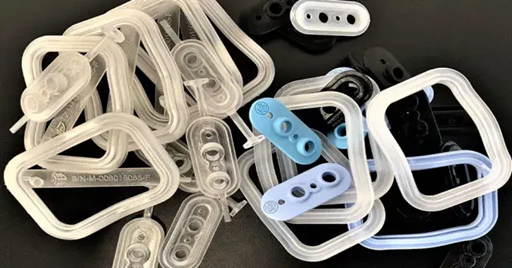
Seals and Gaskets for Perfect Fit

Creating seal and gasket prototypes for testing and end-use validation is critical to ensure the perfect fit of your consumer products, but they can be time consuming and expensive to produce with conventional methods. 

Our 3D Printing solutions offer the ability of rapid design iteration and prototyping of these complex components. Both through eggshell molding for 100% silicone components, a fast and cost-effective alternative to injection molding, or direct 3D printing of chemical resistant and biocompatible elastomers.
 

3d-systems-figure-4-rubber-65a-blk-rubber-cap-5-300ppi.jpg

Solving Soft Material Components Prototyping Challenges with 3D Printing
CG8.png

Rapid Design Iteration

With 3D Systems’ solutions capable of 3D printing prototypes in less than 24 hours, OEMs can optimize their workflow to reduce the time between design iterations, enabling rapid order fulfillment and faster time-to-market. Digital eggshell molding allows you to get true silicone parts in as fast as 24 hours. For the fastest turnaround, biocompatible and chemical-resistant elastomeric components can be directly 3D printed in minutes.

enduse.png

End-Use Performance

Accuracy, precision, and mechanical properties are critical factors for product validation and end-use components. Achieve production performance with both digital eggshell molding and direct 3D printing, as they offer pristine surface quality, texturing capability, detail fidelity, and exceptional accuracy. 

CG7.png

Best-In-Class Material Properties

To validate your design, digital eggshell molding is compatible with most standard silicones, both tin and platinum based. Our elastomeric materials for 3D printing have excellent tear-resistance for form and fit testing. Further, they are biocompatible and have chemical resistance to hydrocarbons and cleaning chemicals (tested for sealed and surface contact compatibility per ASTM D543 and USCAR2).

CG6.png

Operational Productivity

Our end-to-end additive manufacturing solutions are designed to deliver industry-leading quality, reliability, and productivity to keep your operation running efficiently for high-volume production of prototypes, bridge manufacturing, and mass customization. Maximized uptime, reduced labor enabled by downstream compatibility with automation, and minimized waste contribute to a lower cost per part and high manufacturing yield.

CG2.png
Blur the Line Between Prototyping and Pre-Series Production

Technological innovations create new opportunities to deliver unique consumer experiences, yet they can also present daunting engineering challenges for quality, accuracy, and lead-time.

Our 3D printing solutions eliminate tooling costs and lead-times for housings and covers, and deliver end-use parts with the desired quality, accuracy, and mechanical properties. Our consultants can help you in the entire process, from application development and optimizing part performance, to streamlining your prototyping to production workflows, making them faster and more efficient. 

Solving Housings and Covers Challenges with 3D Printing

3d-Systems-SLS-DuraForm-pa11-nat-adjustable-hat-helmet-liner-300dpi-8841_edited.png

Rapid Order Fulfillment

With 3D Systems’ solutions capable of 3D printing prototypes in less than 24 hours, OEMs can optimize their workflow to reduce the time between design iterations, enabling rapid order fulfillment and faster time-to-market. By eliminating the need for tooling, our additive manufacturing solutions reduce the duration of this process from weeks to hours, helping to save costs and improve quality. Further, in-house production guarantees part delivery for a streamlined supply chain.

CG11.png

End-Use Performance

Accuracy, precision, and mechanical properties are critical factors for end-use components and product validation. Truly functional 3D printed prototypes enable faster real-world product development and validation to take place before costly investments in production tooling. These realistic prototypes can replicate the final production product, in appearance and function, including mechanical characteristics, quality, performance, and optimized ergonomics. 

CG12.png

Best-In-Class Material Properties

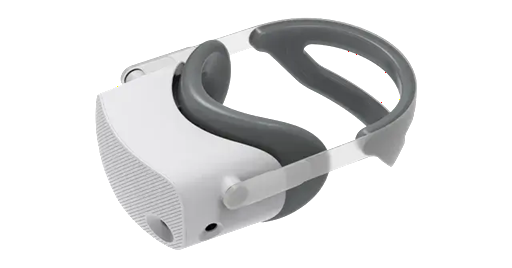
Validating design for wearables requires customer try-ons, therefore biocompatible materials. We offer a range of durable, flexible, and high tear-strength elastomeric materials that are capable of meeting ISO 10993-10 testing requirements for irritation and skin sensitization. Feel confident moving forward with long-term user testing with materials that are UV- and chemical-resistant.
CG13.png

Aesthetic Finishing

Materials come in a range of colors from opaque blacks and whites to clear, and print with exceptional surface quality, similar to injection molding. 3D textures can also be digitally added to minimize downstream finishing requirements and accurately represent end-use parts. Materials are compatible with plating or painting for premium aesthetics.

2fe153_04d0afd6fa2f424e8ce10b7c68e9fafb~mv2.png

Operational Productivity

Our end-to-end additive manufacturing solutions are designed to deliver industry-leading quality, reliability, and productivity to keep your operation running efficiently for high-volume production of prototypes, bridge manufacturing, and mass customization. Maximized uptime, reduced labor enabled by downstream compatibility with automation, and minimized waste contribute to a lower cost per part and high manufacturing yield.

2fe153_056f24f7dd3e4cb293b6286836c7d8f4~mv2.png

Mass Customization

Designing and building customized wearable components is part of creating next-generation consumer technology products. Tailoring these to the consumer can be costly with conventional methods. We facilitate mass-customization by giving engineers precise control over each component, to create a unique customer experience, with the capability to scale. 

TM10.png

Application Development

The 3D Systems Application Innovation Group (AIG) leverages its decades of additive manufacturing expertise to help OEMs and suppliers develop optimized solutions for their applications. By utilizing a "design for additive manufacturing” (DFaM) approach, you can quickly develop and produce parts that consistently meet or exceed industry requirements.

TM11.png

Large Metal Parts with Additive Manufacturing Solutions

Our hardware, software, and materials offer customers unprecedented design flexibility, economics, and product reliability that is unmatched by any subtractive manufacturing method. From the production of intricate direct metal printed parts to extra-large, lightweight, antimony-free patterns for precision investment casting, we can meet your turbomachinery needs.

TM12.png

Production Capability

With our production facilities, we can be your agile manufacturing arm, helping you transition smoothly from prototype to production, while offering increased supply chain capacity and flexibility.

aero11.png

Technology Transfer

From installation, hands-on training and consulting support, and 3D Systems’ ability to develop pre-qualified manufacturing processes for our customers’ critical parts, turbomachinery OEM manufacturers and turbine parts suppliers are quickly able to reach production volumes on their own to reduce costs and accelerate delivery times. Our dedicated team works with you across every step, from pre-production to full-scale volume production.

CG2.png
Blur the Line Between Prototyping and Pre-Series Production

Technological innovations create new opportunities to deliver unique consumer experiences, yet they can also present daunting engineering challenges for quality, accuracy, and lead-time.

Our 3D printing solutions eliminate tooling costs and lead-times for housings and covers, and deliver end-use parts with the desired quality, accuracy, and mechanical properties. Our consultants can help you in the entire process, from application development and optimizing part performance, to streamlining your prototyping to production workflows, making them faster and more efficient. 

Solving Housings and Covers Challenges with 3D Printing

Rapid Order Fulfillment

With 3D Systems’ solutions capable of 3D printing prototypes in less than 24 hours, OEMs can optimize their workflow to reduce the time between design iterations, enabling rapid order fulfillment and faster time-to-market. By eliminating the need for tooling, our additive manufacturing solutions reduce the duration of this process from weeks to hours, helping to save costs and improve quality. Further, in-house production guarantees part delivery for a streamlined supply chain.

TM10.png

Large Metal Parts with Additive Manufacturing Solutions

Our hardware, software, and materials offer customers unprecedented design flexibility, economics, and product reliability that is unmatched by any subtractive manufacturing method. From the production of intricate direct metal printed parts to extra-large, lightweight, antimony-free patterns for precision investment casting, we can meet your turbomachinery needs.

TM11.png

Production Capability

With our production facilities, we can be your agile manufacturing arm, helping you transition smoothly from prototype to production, while offering increased supply chain capacity and flexibility.

TM12.png

Technology Transfer

From installation, hands-on training and consulting support, and 3D Systems’ ability to develop pre-qualified manufacturing processes for our customers’ critical parts, turbomachinery OEM manufacturers and turbine parts suppliers are quickly able to reach production volumes on their own to reduce costs and accelerate delivery times. Our dedicated team works with you across every step, from pre-production to full-scale volume production.

aero11.png
TM10.png

Application Development

The 3D Systems Application Innovation Group (AIG) leverages its decades of additive manufacturing expertise to help OEMs and suppliers develop optimized solutions for their applications. By utilizing a "design for additive manufacturing” (DFaM) approach, you can quickly develop and produce parts that consistently meet or exceed industry requirements.

TM11.png

Large Metal Parts with Additive Manufacturing Solutions

Our hardware, software, and materials offer customers unprecedented design flexibility, economics, and product reliability that is unmatched by any subtractive manufacturing method. From the production of intricate direct metal printed parts to extra-large, lightweight, antimony-free patterns for precision investment casting, we can meet your turbomachinery needs.

TM12.png

Production Capability

With our production facilities, we can be your agile manufacturing arm, helping you transition smoothly from prototype to production, while offering increased supply chain capacity and flexibility.

aero11.png

Technology Transfer

From installation, hands-on training and consulting support, and 3D Systems’ ability to develop pre-qualified manufacturing processes for our customers’ critical parts, turbomachinery OEM manufacturers and turbine parts suppliers are quickly able to reach production volumes on their own to reduce costs and accelerate delivery times. Our dedicated team works with you across every step, from pre-production to full-scale volume production.

TM10.png

Application Development

The 3D Systems Application Innovation Group (AIG) leverages its decades of additive manufacturing expertise to help OEMs and suppliers develop optimized solutions for their applications. By utilizing a "design for additive manufacturing” (DFaM) approach, you can quickly develop and produce parts that consistently meet or exceed industry requirements.

TM11.png

Large Metal Parts with Additive Manufacturing Solutions

Our hardware, software, and materials offer customers unprecedented design flexibility, economics, and product reliability that is unmatched by any subtractive manufacturing method. From the production of intricate direct metal printed parts to extra-large, lightweight, antimony-free patterns for precision investment casting, we can meet your turbomachinery needs.

TM12.png

Production Capability

With our production facilities, we can be your agile manufacturing arm, helping you transition smoothly from prototype to production, while offering increased supply chain capacity and flexibility.

aero11.png

Technology Transfer

From installation, hands-on training and consulting support, and 3D Systems’ ability to develop pre-qualified manufacturing processes for our customers’ critical parts, turbomachinery OEM manufacturers and turbine parts suppliers are quickly able to reach production volumes on their own to reduce costs and accelerate delivery times. Our dedicated team works with you across every step, from pre-production to full-scale volume production.

Answer Challenges Related to Thermal Efficiency

SC9.png

Reduce Thermal Gradients

Changing temperatures and thermal gradients in wafer tables negatively affects the lithography process and system performance, causing distortion and impacting throughput and accuracy. 

SC10.png

Improve Time to Market

Optimizing wafer tables for thermal efficiency and performance with traditional manufacturing methods typically requires multiple design iterations that can negatively affect project timelines.

SC11.png

Lower Cost and Increase Reliability

Increasing wafer table complexity with traditional manufacturing, such as by introducing weld seams, typically results in rising part costs. This also sacrifices part performance and reliability.

Answer Challenges Related to Thermal Efficiency

Reduce Fluid Flow Disturbances

Semiconductor equipment depends on manifolds that must have optimally designed and manufactured fluid channels. Traditional manufacturing methods have abrupt corners and stagnant flow zones that result in turbulence and increased pressure drops. 

Minimize Weight and Volume

Traditional manufacturing, based on the geometric limitations of milling and tooling, can lead to the design of manifolds with excess weight and volume, negatively affecting system performance. 

Eliminate Fluid Leakage at Connections

The geometric limitations of subtractive manufacturing means that manifolds typically undergo an assembly process that requires connection points prone to failure and leakage.

2fe153_6da8f4d37adb441fb2354ccfd359d42a~mv2.png
Create Structurally Optimized and Lightweight Advanced Flexure Designs

Additive manufacturing allows for the structural optimization and light-weighting of advanced flexure designs that reduce weight and minimize vibration to meet the exacting requirements of semiconductor capital equipment. Additionally, multipart assemblies can be replaced with monolithic parts for increased reliability, improved manufacturing, and yield.  

With years of application engineering experience in the semiconductor industry, we can help you optimize the structural designs of flexures, advanced motion mechanisms, and components. Additive manufacturing gives designers the flexibility to optimize the structural topology of your part (i.e., lightweighting) with a suite of high-strength metal alloys. These designs can meet the performance requirements of semiconductor capital equipment more precisely, improve the strength-to-weight ratio, and deliver a faster time to market. With our metal additive solutions, you can also avoid traditional complex manufacturing assembly by consolidating several parts into one, which improves yield and reliability and reduces labor and inspection costs. 

The Benefits of Metal Additive Manufacturing

SC12.png

Design Flexibility ‘Function over Form’

Additive manufacturing makes it possible to optimally design, rapidly iterate, and manufacture lightweight, topology-optimized flexures much closer to the ideal kinematics required with fewer unwanted degrees of freedom.

SC7.png

High Quality and Accuracy for Clean Room Environments

Our metal additive manufacturing solutions ensure high material quality and part accuracy, producing parts in an inert atmosphere with a steady, ultra-low oxygen level—coupled with proprietary processes for optimal particle cleanliness. This results in metal parts that meet cleanroom requirements and are fit for use in lithography equipment.

sc15.png

Performance and Productivity

Light-weighting semiconductor components and advanced motion mechanisms reduces inertia and improves lithography and wafer processing machine speed and uptime, leading to more wafers processed. Additive manufacturing also delivers structurally optimized flexures with reduced part counts and assemblies. Replacing multipart assemblies with monolithic parts increases reliability, improves manufacturing yield, and reduces labor costs.

Answer Challenges Related to Flexure and Structural Optimization

SC17.png

Reduce Vibration, Hysteresis and Inertia to Improve Cycle Time

Semiconductor capital equipment features fast-moving mechanisms and components, and unnecessary weight can induce vibration, resonance, and inertia into the system, which negatively affects system accuracy and speed.

2fe153_6da8f4d37adb441fb2354ccfd359d42a~mv2.png

Optimized Strength-to-Weight Ratios

Reducing flexure weight and vibration requires designs with optimal strength-to-weight ratios to deliver exceptional system performance.

SC16.png

Advanced Flexure Kinematics

Conventional flexures can be bulky and still deviate from the ideal kinematics, resulting in accuracy deviations and crosstalk.

Increase Cooling Efficiency of Linear Stages While Reducing Part Count

By optimizing cooling channels and cooling jackets’ walls thickness, you dramatically improve temperature stability of the fast-moving linear stage. Maintaining encoders’ scale thermal uniformity ensures positioning accuracy and longer-term stability. Combined with component consolidation, this results in improved system reliability and a reduction in heat sources.

Drawing on our many years of experience in semiconductor capital equipment applications, we can help you apply additive manufacturing to optimize thermal management. With unique designs attainable only through additive manufacturing, you can efficiently dissipate heat, enhance system throughput and accuracy, and improve overall performance.

2fe153_cb220172d5b44da78fa70bb3f4a56eba~mv2.jpg

The Benefits of Metal Additive Manufacturing

SC18.png

Design Flexibility

Because additive manufacturing gives semiconductor equipment and thermal management engineers unprecedented design flexibility, they are able to unlock new levels of complexity for integrated cooling channels and reduce part counts and assemblies, thus maximizing the efficiency of linear stages cooling jackets and increasing their reliability for higher performance and accuracy. 

SC19.png

High Quality and Accuracy for Clean Room Environments

High material quality and part accuracy produced in an inert atmosphere with a steady, ultra-low oxygen level—coupled with proprietary processes for optimal particle cleanliness—result in metal parts that meet clean room requirements and are fit for use in semiconductor equipment. Our metal additive manufacturing solutions enable wall thicknesses as low as 0.6 mm, minimizing the thermal resistance between the cooling channels and the controlled surface.

SC8.png

Performance and Productivity

Better thermal management and increased component reliability enable speed and uptime increases in semiconductor manufacturing equipment, ultimately leading to increased manufacturing yield with more wafers processed and higher overall lifecycle value.

Your Path to More Efficient Linear Stages Coolers

2fe153_cb220172d5b44da78fa70bb3f4a56eba~mv2.jpg

Improve Cooling Efficiency

Due to high acceleration, linear stages can generate and maintain significant thermal loads. Efficient thermal management of linear stages allows for longer service life and consistent positioning accuracy, positively impacting overall equipment throughput.

SC20.png

Increased Components Reliability

By creating monolithic cooling jackets, you are eliminating sources of leakage at weld lines. Superior cooling efficiency can be gained in less space, with no assembly required, translating to longer intervals between service and maximum tool uptime.

SC10.png

Accelerate Time-to-Market and Lower Costs

Monolithic components dramatically reduce the number of suppliers required to accomplish an engineering project. Additive manufacturing enables rapid design iteration in the product development stage with almost static cost and lead-time, independent of the geometry.

SC21.png
Increase Showerhead Deposition Precision and Uniformity While Reducing Production Lead Times

Showerheads are commonly used for even material deposition in semiconductor manufacturing. Their hole configuration and temperature stability are important factors in determining uniformity of deposition.

Using our metal additive manufacturing solutions, you can deliver geometries that couldn’t be produced with traditional methods, including non-cylindrical nozzle geometries for deposition control, more intricate cooling channels to extract heat, and consolidated components to prevent leakages. Thousands of small holes can be 3D printed with negligible impact on cost and production time.

The Benefits of Metal Additive Manufacturing

SC22.png

Design Flexibility ‘Function over Form’

Additive manufacturing makes it possible to optimally design, rapidly iterate, and manufacture lightweight, topology-optimized flexures much closer to the ideal kinematics required with fewer unwanted degrees of freedom.

SC7.png

High Quality and Accuracy for Clean Room Environments

Our metal additive manufacturing solutions ensure high material quality and part accuracy, producing parts in an inert atmosphere with a steady, ultra-low oxygen level—coupled with proprietary processes for optimal particle cleanliness. This results in metal parts that meet cleanroom requirements and are fit for use in lithography equipment.

SC17.png

Performance and Productivity

Light-weighting semiconductor components and advanced motion mechanisms reduces inertia and improves lithography and wafer processing machine speed and uptime, leading to more wafers processed. Additive manufacturing also delivers structurally optimized flexures with reduced part counts and assemblies. Replacing multipart assemblies with monolithic parts increases reliability, improves manufacturing yield, and reduces labor costs.

Even Deposition with Semiconductor Showerheads

2fe153_cb220172d5b44da78fa70bb3f4a56eba~mv2.jpg

Improve Cooling Efficiency

Due to high acceleration, linear stages can generate and maintain significant thermal loads. Efficient thermal management of linear stages allows for longer service life and consistent positioning accuracy, positively impacting overall equipment throughput.

SC20.png

Increased Components Reliability

By creating monolithic cooling jackets, you are eliminating sources of leakage at weld lines. Superior cooling efficiency can be gained in less space, with no assembly required, translating to longer intervals between service and maximum tool uptime.

SC10.png

Accelerate Time-to-Market and Lower Costs

Monolithic components dramatically reduce the number of suppliers required to accomplish an engineering project. Additive manufacturing enables rapid design iteration in the product development stage with almost static cost and lead-time, independent of the geometry.

Increase Cooling Efficiency of Linear Stages While Reducing Part Count

By optimizing cooling channels and cooling jackets’ walls thickness, you dramatically improve temperature stability of the fast-moving linear stage. Maintaining encoders’ scale thermal uniformity ensures positioning accuracy and longer-term stability. Combined with component consolidation, this results in improved system reliability and a reduction in heat sources.

Drawing on our many years of experience in semiconductor capital equipment applications, we can help you apply additive manufacturing to optimize thermal management. With unique designs attainable only through additive manufacturing, you can efficiently dissipate heat, enhance system throughput and accuracy, and improve overall performance.

2fe153_36deaf05d6204a47a9b27a988fb00ce9~mv2.png

The Benefits of Metal Additive Manufacturing

SC26.png

Design Flexibility

Additive manufacturing makes it possible to optimally design, and rapidly iterate and manufacture gas feeders and mixers within tight spaces, with numerically modeled gas pathways that reliably convey and efficiently mix gases toward the process chamber.

SC27.png

High Quality and Accuracy for Clean Room Environments

High material quality, fine part details and accuracy produced in an inert atmosphere with a steady, ultra-low oxygen level—coupled with proprietary processes for optimal particle cleanliness—result in metal parts that meet clean room requirements and are fit for use in semiconductor equipment.

SC8.png

Performance and Productivity

A reduction in gas flow turbulence enables an accurate and even spread of cleaning and etching gases, increasing overall system efficiency and throughput to process more wafers. Additive manufacturing also delivers structurally optimized gas feeders with reduced part counts and assemblies. Replacing multipart assemblies with monolithic parts increases reliability, improves manufacturing yield, and reduces labor costs.

Optimizing Gas Conveyance and Mixing

sc24.png

Improve Gas Flow Efficiency

Additive manufacturing gives semiconductor equipment engineers unprecedented design flexibility. They are able to unlock novel internal patterns, nozzle shapes, and mixing chambers, thus optimizing gas flow and mixing for maximum performance and efficiency.

SC20.png

Increase Reliability

Additive manufacturing delivers structurally optimized gas feeders and mixers with reduced part counts and assemblies. This greatly increases component reliability by eliminating fluid leakage at connections under the highest temperatures and operating pressures for higher component integrity.

SC25.png

Minimize Volume

Thinner walls and component consolidation deliver leak-tight integrity and enable more efficient functionality in a smaller package size. Produce multi-axis features and trapped volumes with significant ease compared to traditional manufacturing processes.

The Experience and Technology to Increase Performance and Gain Agility

Design Flexibility

Optimally design, rapidly iterate, and manufacture components with complex features, including wafer tables with conformal cooling channels, part-consolidated end effectors, and advanced kinematic couplings and flexures for optical components. 

Produce more wafers by improving semiconductor equipment accuracy, speed, reliability, and throughput. Realize performance benefits in critical parts and subsystems, including thermal management, optimal fluid flow, lightweighting, and part consolidation.

High Quality and Accuracy for Clean Room Environments

Our metal additive solutions ensure high material quality and part accuracy, producing parts in an inert atmosphere with a steady, ultra-low oxygen level — coupled with proprietary processes for optimal particle cleanliness. This results in metal parts that meet clean room requirements and are fit for use in high vacuum environments.

Metal 3D Printing Expertise and Capability

Establish your own metal additive manufacturing capabilities and quickly scale to production volumes while partnering with us to develop new concepts/prototypes.

Our manufacturing facilities offer increased capacity, flexibility, and reduced inventory. We can help eliminate supply chain risks for OEMs through technology transfer by replicating our manufacturing processes and qualifying your suppliers.

Solutions for Semiconductor Manufacturing Equipment that Solve Challenges

TM10.png

Application Development

Through our Application Innovation Group, we leverage years of semiconductor and metal additive manufacturing expertise to help find optimized solutions for your applications. The support we provide enables an engineering and designing approach that repeatedly meets strict requirements.

SC28.png

Metal Additive Capabilities

With our combination of metal hardware, software, and materials, we offer solutions with unprecedented design flexibility, economics, and reliability that traditional manufacturing cannot match.

TM12.png

Production Capability

With our production facilities, we can be your agile manufacturing arm, helping you transition from prototype to production, while offering increased supply chain capacity and flexibility. We also offer on-demand printing services available to you 24/7.

aero11.png

Technology Transfer

We help semiconductor OEMs and suppliers establish their own metal additive capabilities that reduce costs and ramp times. Through hands-on training and consultation—and the transfer of prequalified manufacturing processes to your site—our dedicated team works with you across every step, from pre-production to full-scale volume production.

Talk to an Expert

bottom of page